
 by
by 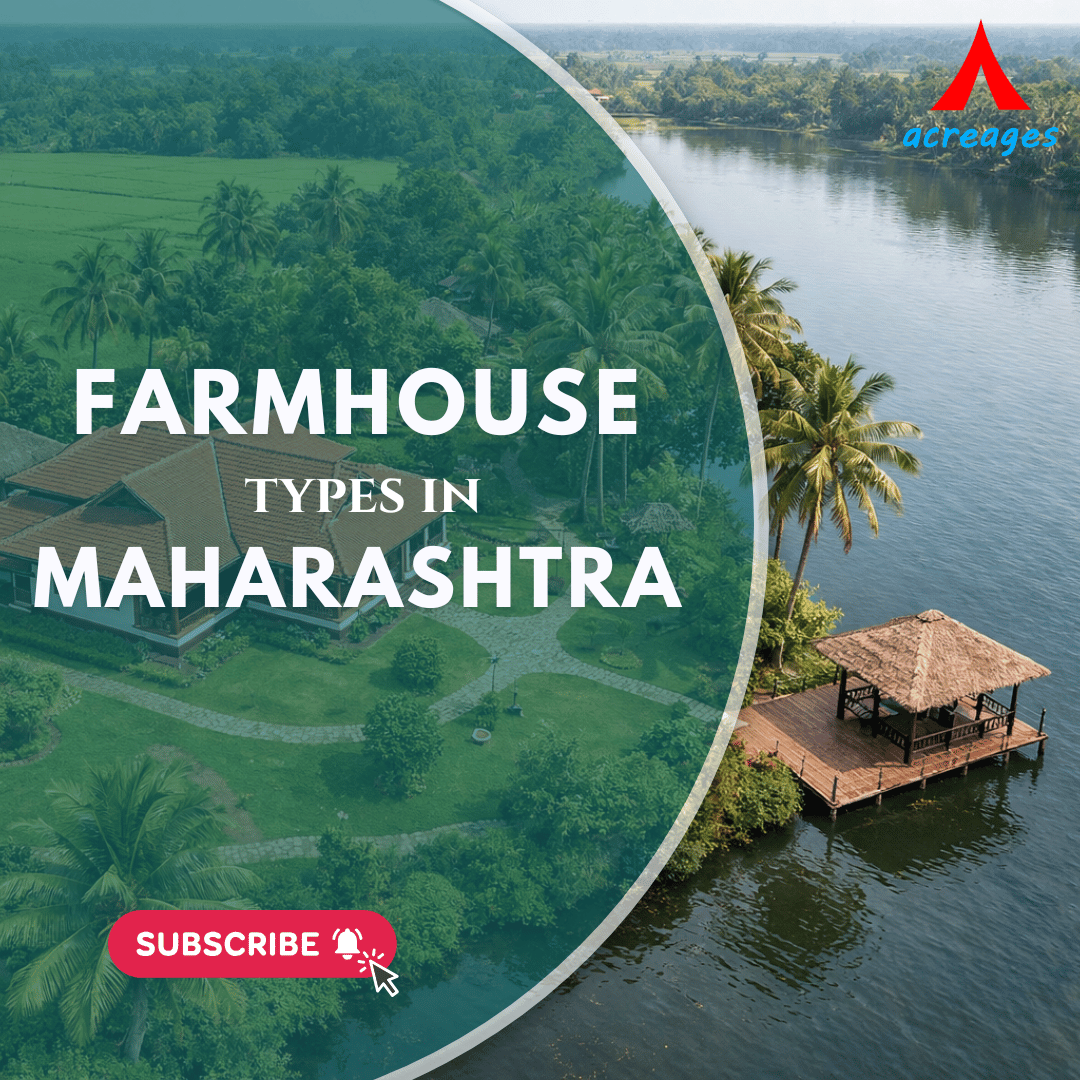
Maharashtra offers one of the most diverse landscapes in India — from the rugged Sahyadri mountain range to fertile plains, river belts, and the humid Konkan coast. This geographical diversity has led to the evolution of multiple farmhouse types, each shaped by climate, land use, and lifestyle needs.
This guide brings together all major farmhouse categories found across the state — helping you understand how they differ in structure, purpose, and practicality.
1. Traditional Rural Farmhouses
These are the original farmhouses of Maharashtra — built primarily for agricultural living and climate adaptability. Their design focuses on practicality, using locally available materials that naturally regulate temperature. The courtyard (wada-style) layout promotes ventilation and community living. Even today, they remain highly efficient for rural lifestyles.
Characteristics:
- Mud or brick construction
- Sloping tiled roofs for heavy rains
- Courtyard-based layouts (Wada style)
- Naturally ventilated
2. Hill-Side / Valley View Farmhouses
These farmhouses are designed to maximize scenic views rather than farming efficiency. Positioned on slopes or elevated land, they often include large balconies, decks, and glass openings. The architecture focuses on openness and connection with nature. They are commonly used as peaceful retreats or second homes.
Characteristics:
- Elevated plots
- Large decks/balconies
- View-oriented layouts
3. Riverfront Farmhouses
Located near rivers or seasonal water bodies. Located close to rivers or seasonal streams, these farmhouses benefit from cooler microclimates and scenic surroundings. Water availability can support small-scale farming or landscaping. They are ideal for leisure-focused use with a natural setting.
Characteristics:
- Water proximity
- Cooler surroundings
4. Coastal (Konkan) Farmhouses
Adapted to heavy rainfall and coastal humidity. These farmhouses are adapted to high humidity, heavy rainfall, and coastal conditions. Construction typically uses laterite stone and elevated plinths to prevent water damage. Surrounded by coconut and mango plantations, they integrate well with the natural environment. They are often used for seasonal stays and plantation-based living.
Characteristics:
- Laterite stone walls
- High plinth construction
5. Functional Agricultural Farmhouses
Focused on farming, not lifestyle. These are built with a clear focus on farming operations rather than aesthetics or leisure. They include irrigation systems, storage areas, and worker accommodations. The structure is usually simple and highly utilitarian. Their primary role is to support agricultural productivity and generate income.
Characteristics:
- Irrigation systems
- Storage and sheds
- Worker accommodation
6. Planned Farmhouse Communities
Organized developments with multiple plots. These developments offer organized plots within a larger layout, often with basic infrastructure like roads and utilities. They provide a balance between rural living and structured development. Buyers benefit from clearer land division and easier access. These are popular for weekend homes and first-time buyers.
Characteristics:
- Roads, plot demarcation
- Basic infrastructure
- Shared facilities
7. Load-Bearing Farmhouses
Simple structural system using walls as support. This traditional construction method relies on walls to support the structure instead of a frame. It is cost-effective and suitable for single or low-rise buildings. However, it limits design flexibility and expansion possibilities. It is often chosen for budget-friendly or rural constructions.
Characteristics:
- No RCC frame
- Cost-effective
- Limited height
Use:
Budget construction
8. RCC Frame Modern Farmhouses
Urban construction style in rural areas. These farmhouses use reinforced concrete structures, allowing for modern designs and multi-storey construction. They offer greater flexibility in layout and future expansion. This style blends urban construction techniques with rural settings. It is commonly used for long-term second homes.
Characteristics:
- Column-beam structure
- Multi-floor flexibility
- Modern design
9. Eco-Friendly Farmhouses
Built with sustainability in mind. Designed with sustainability in mind, these farmhouses focus on reducing environmental impact. They incorporate solar energy, rainwater harvesting, and natural building materials. The design emphasizes self-sufficiency and harmony with nature. They are increasingly popular among environmentally conscious buyers.
Characteristics:
- Natural materials
- Solar energy
- Water conservation systems
10. Resort-Style Farmhouses
Designed for recreation and rentals. These are designed for leisure, entertainment, and short-term rentals rather than permanent living. They often include amenities like pools, lawns, and outdoor activity spaces. The layout focuses on accommodating groups and enhancing guest experience. They are widely used for vacation rentals and events.
Characteristics:
- Pool, lawn, outdoor zones
- Group-friendly design
- High visual appeal
11. Renovated Ancestral Farmhouses
Old homes upgraded with modern comforts. These properties preserve traditional architecture while upgrading interiors for modern comfort. They maintain cultural and historical value, often reflecting regional heritage. Renovation allows for improved functionality without losing authenticity. They are ideal for those seeking heritage-style living.
Characteristics:
- Retained heritage structure
- Modern interiors
- Cultural value
12. Plantation-Based Farmhouses
Land is the primary asset here. In these setups, the land itself is the primary asset, often used for crops like mango, coconut, or cashew. The residential structure is usually secondary and simple. Income generation through agriculture is a key focus. They are suited for long-term investment and land appreciation.
Characteristics:
- Income-generating plantations
- Basic residential structure
- Long-term value
13. Off-Grid Remote Farmhouses
Built for complete independence from urban systems. These are located in isolated areas and designed for complete independence from public utilities. They rely on solar power, water storage, and natural resources. Accessibility may be limited, but they offer unmatched privacy and connection with nature. They are ideal for those seeking a self-sufficient lifestyle.
Characteristics:
- Solar-powered
- Water self-sufficient
- Remote access
Final Understanding
Farmhouses in Maharashtra are not defined by just construction, but by a combination of:
- Geography
- Purpose
- Design
- Infrastructure
- Lifestyle intent
Each type serves a different need — from farming and sustainability to leisure and investment.
A clear understanding of these categories helps make practical, informed decisions rather than emotional or trend-driven ones.
Acreages
At Acreages, this belief forms the foundation of every project — not just creating land parcels, but shaping spaces where people can reconnect with what truly matters.
For more details about our project, please visit www.acreages.co.in