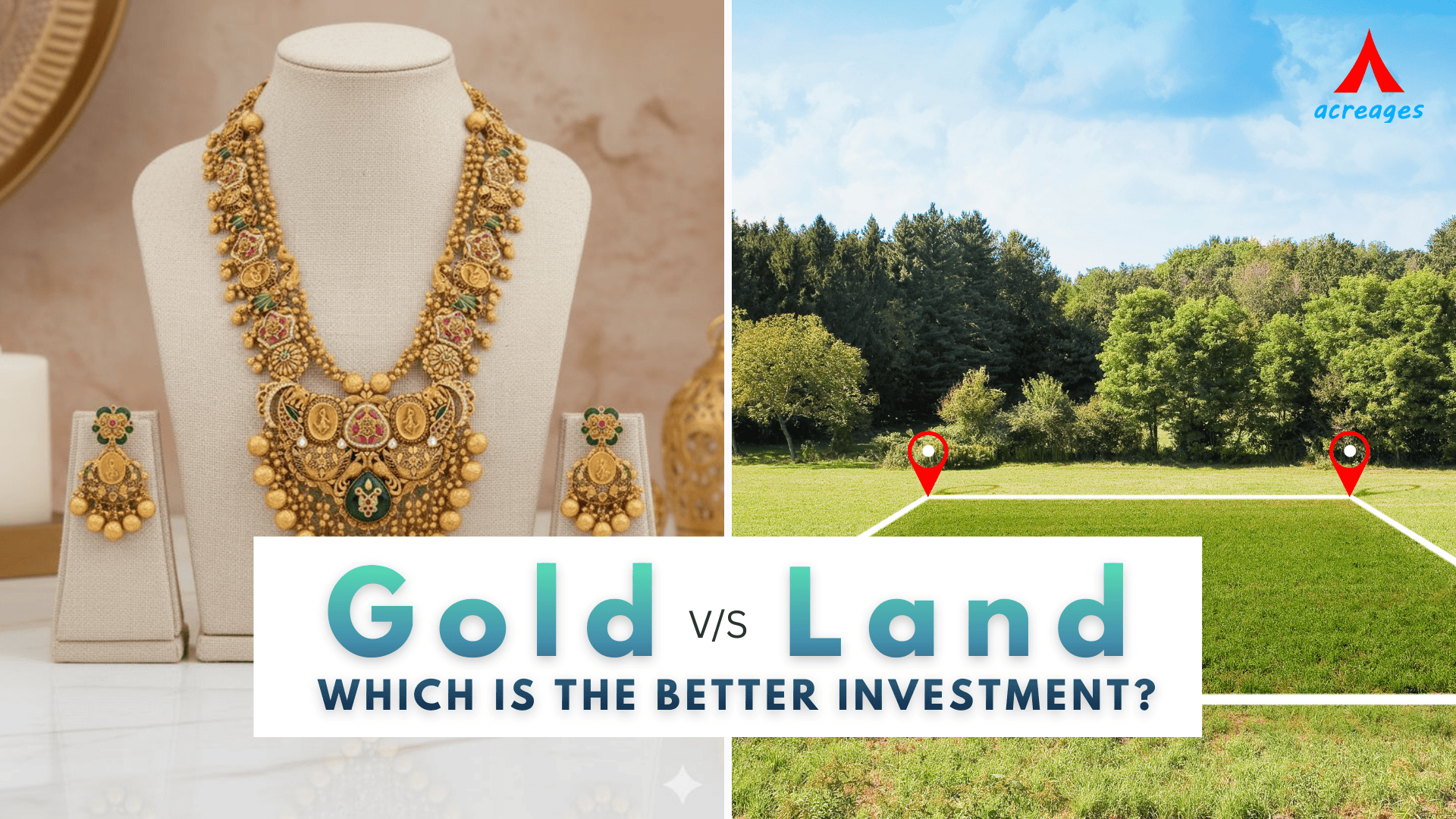
For centuries, Indians have turned to tangible assets when it comes to securing their financial future. Two of the most popular choices have been land and gold. Both are deeply ingrained in our culture and traditions. Land represents stability, growth, and the dream of ownership, while gold is tied to wealth, status, and financial security during uncertain times.
While gold is universally liquid, portable, and culturally significant, land stands tall as a wealth creator, offering long-term appreciation, usability, and tangible control. But the real question for modern investors is: Which is better in today’s context – land or gold?
Let us dive deep into a point-by-point comparison to understand which asset can truly transform your investment journey.
Detailed Comparison – Land vs Gold
1. Tangibility and Utility
Land:
Land is not just an investment; it is a living, usable asset. You can build a house, start farming, or create a business space. The usability of land allows you to enjoy your investment while it grows.
Gold:
Gold, while tangible, has limited utility. It is mainly ornamental or stored for security. Beyond wearing or pledging it, you cannot derive day-to-day use or enjoyment from gold.
2. Growth Potential
Land:
Historically, land prices have seen exponential growth, especially in developing urban and semi-urban areas. Infrastructure projects, highways, and industrial zones push land values much higher over time.
Gold:
Gold prices fluctuate based on global demand, inflation, and economic uncertainties. While gold is considered a “safe haven,” it does not multiply wealth the way land does in appreciating localities.
3. Income Generation
Land:
Land can generate passive income through leasing, renting for farming, warehouses, parking, or even commercial activities. This means land is not just a static asset but also a revenue-generating one.
Gold:
Gold does not generate income unless you sell it or pledge it for loans. Even gold kept in a bank locker incurs costs instead of creating returns.
4. Inflation Hedge
Land:
Land acts as one of the strongest hedges against inflation. As the cost of living rises, so does the value of land, especially in high-demand areas.
Gold:
Gold is also known as an excellent hedge against inflation. In times of economic crises, its value rises significantly, which makes it a safe cushion for investors.
5. Liquidity
Land:
Land is less liquid. Selling it requires time, paperwork, and legal processes. However, once sold, the returns are usually far higher.
Gold:
Gold is highly liquid. You can sell even a small amount at any jewelry shop or bank instantly, making it one of the easiest assets to convert into cash.
6. Emotional & Social Value
Land:
Owning land carries immense pride and social respect in Indian culture. It is tied to legacy and is often passed down through generations.
Gold:
Gold also has cultural and emotional value, especially during weddings and festivals. However, gold is often bought for consumption, while land is bought for legacy and wealth building.
7. Risk Factor
Land:
Risks in land investment usually arise from legal disputes, encroachment, or poor documentation. But with proper due diligence, these risks can be minimized.
Gold:
The risks associated with gold are comparatively lower. It is globally accepted and rarely loses its intrinsic value, though price fluctuations can impact returns.
8. Long-Term Wealth Creation
Land:
Land is known as a “wealth multiplier.” A strategically purchased piece of land can appreciate multiple times over a decade, turning ordinary buyers into crorepatis.
Gold:
Gold preserves wealth but rarely multiplies it in the same proportion. It is stable but not transformative in wealth-building terms.
9. Maintenance & Storage
Land:
Land requires some level of maintenance—fencing, registration, taxes, etc. However, it is not perishable and remains forever.
Gold:
Gold needs secure storage in lockers, and there is always a risk of theft. Locker charges in banks also add to the holding costs.
10. Generational Asset
Land:
Land holds generational value. Families across India consider land the ultimate inheritance—one that continues to support future generations.
Gold:
Gold can also be passed down easily to the next generation, but usually in smaller quantities. It does not provide the same lifestyle or usability benefits as land.
Conclusion
When comparing land vs gold, both investments have their merits, but their purpose differs. Gold is highly liquid, portable, and culturally significant. It is ideal for short-term safety and as a hedge against global economic instability.
On the other hand, land is a long-term wealth builder. It not only appreciates in value but also provides real utility, income generation, and social prestige. While gold will always remain an emotional and safe choice for Indian families, land stands as the asset that transforms ordinary investors into long-term wealth creators.
In essence:
• Gold is security.
• Land is prosperity.
For the modern investor, the perfect portfolio may contain a balance of both—but when it comes to creating life-changing wealth, land has the undeniable edge.
Acreages
At Acreages, we believe that land is more than just an investment—it is a legacy for generations. With 12+ years of trusted experience in real estate development, Acreages has successfully delivered multiple premium farmland and weekend home projects near Mumbai and Pune.
From scenic farmhouse plots near the Sahyadri ranges to thoughtfully planned gated farmland communities, Acreages ensures transparency, trust, and long-term value for every investor.
Legacy